August 4, 2026
Your sidewall says 265/70R17. Your buddy says you're running 31s. Both are right. Here's what those numbers mean, a chart with the sizes people look up most, and the one rule to follow if you're thinking about going bigger.
The Short Answer
A 265/70R17 is about 31.6 inches tall and 10.4 inches wide. That's why people call it a 31 or a 32.
If you only need your own size converted, drop it into our tire size converter and you're done. If you want to know where those numbers come from, the rest of this page walks through it in plain English. You don't need to read all of it.
The five things worth knowing:
- An inch is 25.4 millimeters. That one number does all the work.
- In a size like 265/70R17, the 265 is the width in millimeters, the 70 is how tall the sidewall is compared to that width, and the 17 is the wheel size in inches.
- To get the height of the whole tire, add the wheel size to two sidewalls.
- Metric sizes almost never land on a round number. A tire people call a 33 usually measures somewhere between 32.7 and 33.2 inches.
- If you're switching sizes, stay within about 3 percent of the height you have now, or your speedometer will start lying to you.
What Those Numbers On Your Sidewall Actually Mean
A 265/70R17 is a tire 265 millimeters wide, with a sidewall 70 percent as tall as the tire is wide, that fits a 17 inch wheel. If there's a 112T on the end, that's the weight and speed rating. Every part of the code is doing a job.
- 265 is how wide the tire is in millimeters, measured across from one sidewall to the other at the fattest point. This is called the section width. It's not the width of the tread that touches the road.
- 70 is the sidewall height, given as a percentage of the width rather than an actual measurement. A 70 means the sidewall is 70 percent as tall as the tire is wide. The industry calls this the aspect ratio. A smaller number means a shorter, stubbier sidewall.
- R means radial construction, where the body plies run across the tire from bead to bead. The alternative is bias ply, where the plies run at an angle and overlap. Nearly every tire sold for street use today is a radial, and bias ply now survives mostly on trailers, classics, and dedicated off road rigs.
- 17 is the wheel diameter in inches. It's the one number on the sidewall already in the units you want.
- 112T is the load index and speed rating. The 112 maps to a maximum load in pounds, and T is a maximum sustained speed rating.
You'll also see the same size written 235/45/18 or 235 45 18, with slashes or spaces instead of the R. That's the same tire as a 235/45R18. Dropping the R is just shorthand, and every retailer treats the two as identical.
Here's the part nobody explains, and it's the reason this conversion trips people up: metric sizing isn't actually metric. The width is millimeters, the profile is a percentage of that width, and the wheel is inches. Three different units in one code. Once you accept that, the rest is arithmetic.
Find Tires That Fit Your Exact Vehicle
How To Convert A Metric Tire Size To Inches
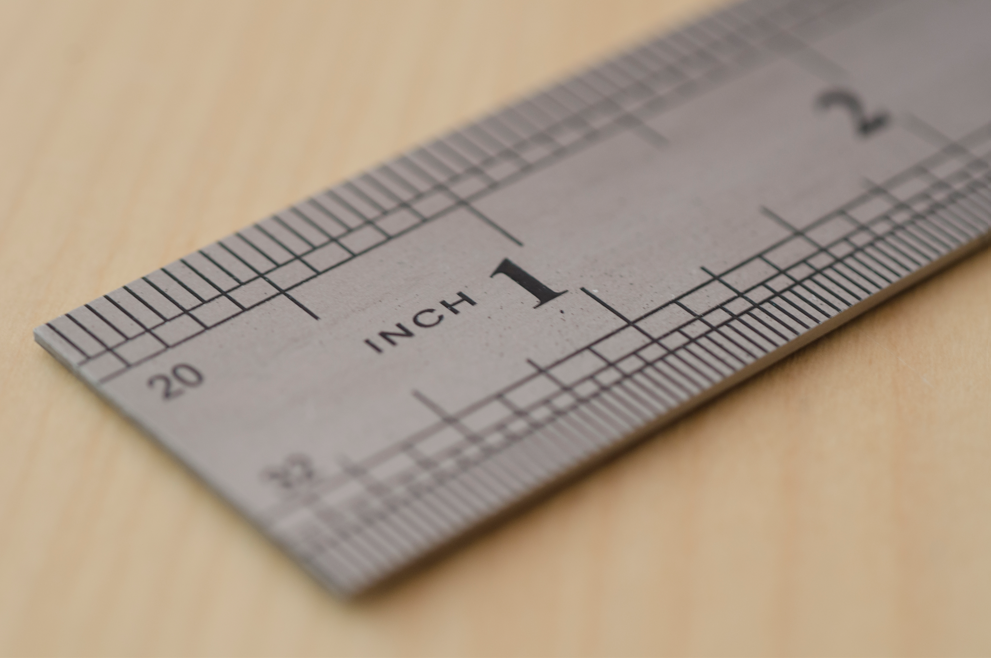
Multiply the width by the aspect ratio to get sidewall height in millimeters, divide by 25.4 to reach inches, double it because there's a sidewall above the wheel and below it, then add the wheel diameter. Everything rests on one fact: one inch equals 25.4 millimeters.
Using 265/70R17 as the example:
- Find the sidewall in millimeters. 265 multiplied by 0.70 equals 185.5 millimeters.
- Convert to inches. 185.5 divided by 25.4 equals 7.3 inches.
- Double it. 7.3 multiplied by 2 equals 14.6 inches, top and bottom.
- Add the wheel. 14.6 plus 17 equals 31.6 inches tall.
For the width, skip the aspect ratio and divide by 25.4 on its own. 265 divided by 25.4 is 10.4 inches. So a 265/70R17 is roughly a 31.6 by 10.4 tire on a 17 inch wheel.
How To Convert Inches To A Metric Tire Size
Work the formula backward. Subtract your wheel diameter from the target height, halve the result to get one sidewall in inches, multiply by 25.4 to reach millimeters, then divide by the width you want. The answer is your aspect ratio.
Say you want a 33 inch tire on an 18 inch wheel, 275 wide. Take 33 minus 18, which is 15 inches of sidewall total, so 7.5 inches each. That's 190.5 millimeters. Divide by 275 and you get 0.69, which rounds to a 70. Your size is 275/70R18, and it measures 33.2 inches.
| Target height | On 17 in wheels | On 18 in wheels | On 20 in wheels |
|---|
| 31 inches | 265/70R17 (31.6 in) | 265/65R18 (31.6 in) | 275/55R20 (31.9 in) |
|---|
| 33 inches | 285/70R17 (32.7 in) | 275/70R18 (33.2 in) | 275/60R20 (33.0 in) |
|---|
| 35 inches | 315/70R17 (34.4 in) | 305/70R18 (34.8 in) | 295/65R20 (35.1 in) |
|---|
| 37 inches | Flotation only | Flotation only | 315/70R20 (37.4 in) |
|---|
You'll rarely land exactly on your target, because those middle numbers only come in steps of five. Chasing 35 inches on a 17 inch wheel at 315 wide, the math asks for a 72.6 and no such tire exists. A 315/70R17 measures 34.4 inches, a 315/75R17 measures 35.6 inches, and you pick a side.
Compare Two Tire Sizes Side By Side
Metric To Inches Conversion Chart
Find your size in the left column and read across. Overall diameter is the height of the tire, and it's the number people mean when they call a tire a 31 or a 33. If your size isn't listed, the formula above works on any size.
Cars, Crossovers, And Minivans
| Metric size | Overall diameter | Section width | Sidewall height | Typical application |
|---|
| 205/55R16 | 24.9 in | 8.1 in | 4.4 in | Compact and sport compact |
|---|
| 225/45R17 | 25.0 in | 8.9 in | 4.0 in | Sport sedan, performance compact |
|---|
| 195/65R15 | 25.0 in | 7.7 in | 5.0 in | Compact car |
|---|
| 255/35R18 | 25.0 in | 10.0 in | 3.5 in | Performance sedan, staggered setups |
|---|
| 225/40R18 | 25.1 in | 8.9 in | 3.5 in | Sport compact, performance sedan |
|---|
| 215/60R16 | 26.2 in | 8.5 in | 5.1 in | Midsize sedan |
|---|
| 215/55R17 | 26.3 in | 8.5 in | 4.7 in | Midsize sedan and hybrid |
|---|
| 235/45R18 | 26.3 in | 9.3 in | 4.2 in | Midsize and sport sedan |
|---|
| 235/40R19 | 26.4 in | 9.3 in | 3.7 in | Performance sedan on 19s |
|---|
| 245/45R18 | 26.7 in | 9.6 in | 4.3 in | Performance sedan |
|---|
| 215/60R17 | 27.2 in | 8.5 in | 5.1 in | Compact crossover |
|---|
| 225/65R17 | 28.5 in | 8.9 in | 5.8 in | Compact crossover |
|---|
| 245/45R20 | 28.7 in | 9.6 in | 4.3 in | Larger crossover and EV |
|---|
| 235/65R17 | 29.0 in | 9.3 in | 6.0 in | Midsize crossover, minivan |
|---|
| 235/60R18 | 29.1 in | 9.3 in | 5.6 in | Midsize crossover |
|---|
| 235/55R19 | 29.2 in | 9.3 in | 5.1 in | Larger crossover on 19s |
|---|
Trucks And SUVs
| Metric size | Overall diameter | Section width | Sidewall height | Commonly called |
|---|
| 255/70R16 | 30.1 in | 10.0 in | 7.0 in | A 30 |
|---|
| 245/75R16 | 30.5 in | 9.6 in | 7.2 in | A 30 |
|---|
| 265/65R18 | 31.6 in | 10.4 in | 6.8 in | A 31 or 32 |
|---|
| 265/70R17 | 31.6 in | 10.4 in | 7.3 in | A 31 or 32 |
|---|
| 265/75R16 | 31.6 in | 10.4 in | 7.8 in | A 31 or 32 |
|---|
| 275/55R20 | 31.9 in | 10.8 in | 6.0 in | A 32 |
|---|
| 275/65R18 | 32.1 in | 10.8 in | 7.0 in | A 32 |
|---|
| 275/70R17 | 32.2 in | 10.8 in | 7.6 in | A 32 |
|---|
| 285/65R18 | 32.6 in | 11.2 in | 7.3 in | A 33 |
|---|
| 285/70R17 | 32.7 in | 11.2 in | 7.9 in | A 33 |
|---|
| 285/75R16 | 32.8 in | 11.2 in | 8.4 in | A 33 |
|---|
| 275/60R20 | 33.0 in | 10.8 in | 6.5 in | A 33 |
|---|
| 255/85R16 | 33.1 in | 10.0 in | 8.5 in | A 33 |
|---|
| 275/70R18 | 33.2 in | 10.8 in | 7.6 in | A 33 |
|---|
| 305/55R20 | 33.2 in | 12.0 in | 6.6 in | A 33 |
|---|
| 295/70R17 | 33.3 in | 11.6 in | 8.1 in | A 33 |
|---|
| 285/75R17 | 33.8 in | 11.2 in | 8.4 in | A 34 |
|---|
| 295/60R20 | 33.9 in | 11.6 in | 7.0 in | A 34 |
|---|
| 275/65R20 | 34.1 in | 10.8 in | 7.0 in | A 34 |
|---|
| 295/70R18 | 34.3 in | 11.6 in | 8.1 in | A 34 or 35 |
|---|
| 315/70R17 | 34.4 in | 12.4 in | 8.7 in | A 35 |
|---|
| 285/65R20 | 34.6 in | 11.2 in | 7.3 in | A 35 |
|---|
| 315/75R16 | 34.6 in | 12.4 in | 9.3 in | A 35 |
|---|
| 305/70R18 | 34.8 in | 12.0 in | 8.4 in | A 35 |
|---|
| 285/75R18 | 34.8 in | 11.2 in | 8.4 in | A 35 |
|---|
| 315/60R20 | 34.9 in | 12.4 in | 7.4 in | A 35 |
|---|
| 295/65R20 | 35.1 in | 11.6 in | 7.5 in | A 35 |
|---|
| 315/70R20 | 37.4 in | 12.4 in | 8.7 in | A 37 |
|---|
Notice that almost nothing lands on a whole number. A tire sold as a 33 usually measures between 32.7 and 33.2 inches, and a 35 is often closer to 34.5. That rounding is normal, and it's worth knowing before you order, because two tires both marketed as 35s can differ by half an inch.
What People Mean When They Say 33s And 35s
They mean the other sizing system, and the good news is it needs no math at all. A size like 33x12.50R15 is already in inches. It reads height, then width, then wheel: 33 inches tall, 12.5 inches wide, on a 15 inch wheel. This is called flotation sizing, or sometimes standard or imperial sizing.
Flotation sizing shows up mostly on all terrain and mud terrain tires. It's easier to say out loud, which is why the truck world defaults to it, but far fewer sizes exist in flotation and it disappears entirely on passenger cars.
Flotation Sizes Decoded
| Flotation size | Overall diameter | Section width | Wheel diameter | Sidewall height |
|---|
| 31x10.50R15 | 31.0 in | 10.50 in | 15 in | 8.0 in |
|---|
| 32x12.50R20 | 32.0 in | 12.50 in | 20 in | 6.0 in |
|---|
| 33x12.50R18 | 33.0 in | 12.50 in | 18 in | 7.5 in |
|---|
| 33x12.50R20 | 33.0 in | 12.50 in | 20 in | 6.5 in |
|---|
| 33x12.50R22 | 33.0 in | 12.50 in | 22 in | 5.5 in |
|---|
| 35x12.50R17 | 35.0 in | 12.50 in | 17 in | 9.0 in |
|---|
| 35x12.50R18 | 35.0 in | 12.50 in | 18 in | 8.5 in |
|---|
| 35x12.50R20 | 35.0 in | 12.50 in | 20 in | 7.5 in |
|---|
| 35x12.50R22 | 35.0 in | 12.50 in | 22 in | 6.5 in |
|---|
| 35x13.50R22 | 35.0 in | 13.50 in | 22 in | 6.5 in |
|---|
| 37x13.50R17 | 37.0 in | 13.50 in | 17 in | 10.0 in |
|---|
| 37x12.50R20 | 37.0 in | 12.50 in | 20 in | 8.5 in |
|---|
| 37x13.50R20 | 37.0 in | 13.50 in | 20 in | 8.5 in |
|---|
| 37x13.50R24 | 37.0 in | 13.50 in | 24 in | 6.5 in |
|---|
| 40x13.50R17 | 40.0 in | 13.50 in | 17 in | 11.5 in |
|---|
You'll also see these written with an x in place of the R, as in 35x12.50x20, and sometimes with the decimal dropped, as in 35x12.5R20. All three describe the same tire. The R only tells you the tire is a radial.
Flotation Sizes And Their Closest Metric Equivalents
If you want a metric tire in roughly the same height as a flotation size, these are the closest matches on the same wheel.
| Flotation size | Closest metric size | Metric diameter | Difference |
|---|
| 31x10.50R15 | 265/75R15 | 30.7 in | 0.3 in smaller |
|---|
| 32x12.50R20 | 275/55R20 | 31.9 in | 0.1 in smaller |
|---|
| 33x12.50R18 | 275/70R18 | 33.2 in | 0.2 in larger |
|---|
| 33x12.50R20 | 275/60R20 | 33.0 in | Even |
|---|
| 35x12.50R17 | 315/70R17 | 34.4 in | 0.6 in smaller |
|---|
| 35x12.50R18 | 305/70R18 | 34.8 in | 0.2 in smaller |
|---|
| 35x12.50R20 | 285/65R20 | 34.6 in | 0.4 in smaller |
|---|
| 37x12.50R20 | 315/70R20 | 37.4 in | 0.4 in larger |
|---|
Above 37 inches the metric options thin out fast, and on 22 inch and 24 inch wheels there's often no metric size in the same height at all. That's why the big diameters stay in flotation sizing.
One honest caveat on flotation sizes: the number on the sidewall is the nominal diameter, and plenty of tires measure a bit under it when new. If you're matching a set you already own, go by the published specs for that exact model rather than the size name.
Shop Today's Best Deals
Why The Width Number Is Not Exactly What You Will Measure
If you're buying the same size you already have, you can skip this part. It matters when you're changing sizes or worried about clearance.
Tire makers measure width on one specific wheel width, and that's the number printed on the sidewall. Put the tire on a wider wheel and it spreads out a little. The rule of thumb is about 0.2 inches of extra width for every half inch of extra wheel.
It adds up. The same 265 can vary by close to an inch across every wheel width it's approved for, which is the difference between a tire that clears your fender and one that rubs.
The width number also isn't the tread. It measures the fattest part of the tire, sidewall bulge included, and the strip actually touching the road is narrower than that. If you're comparing two tires for grip, look up the tread width instead.
What The Letters P And LT Mean In A Tire Size
Here's the short answer for most people: whatever letter is on your door jamb sticker, buy that letter again. If it says P, get a P. If it says LT, get an LT. Done.
The longer answer matters if you tow, haul, or are thinking about switching from one to the other, because these letters control how much weight the tire is allowed to carry.
- P means passenger. These are rated for cars, and when you put one on a truck, van, or SUV the rules make you knock about 10 percent off what it's allowed to carry. A tire stamped for 2,601 pounds counts as 2,365 pounds on a truck.
- LT means light truck. An LT265/70R17 is nearly the same physical size as a P265/70R17, just built tougher so it can hold more air. That's the real trick here: air carries the weight, and the beefier tire exists to hold more air.
- No letter at all means it follows the European standard. It usually swaps in for a P tire of the same size, but the weight ratings aren't always identical, so check them rather than assuming.
- XL or Extra Load means the tire holds more air and carries more weight than the regular version of the same size.
One thing worth knowing if you go the LT route: a heavy duty tire only carries heavy loads when it's actually inflated to the pressure it needs. Run it soft and you paid for capacity you're not getting. If you tow or haul regularly, call us before you order and we'll check the numbers with you.
How Far You Can Go From Your Factory Size
Stay within about 3 percent of the height you have now. Your speedometer, odometer, ABS, and traction control were all calibrated around the factory tire, and inside that 3 percent window they keep working the way they should.
Here's what that looks like in practice. A 235/65R17 is 29.0 inches tall. Three percent of that is 0.87 inches, so anything from about 28.2 to 29.9 inches is fair game. That's a narrower window than most people expect.
Go bigger than that and your speedometer starts reading low, because a taller tire covers more ground with every turn. Jump from a 29.0 inch tire to a 31.6 inch tire and you're 8.9 percent taller, so an indicated 60 mph is really about 65. Your odometer undercounts by the same amount, which quietly pushes back every oil change.
One heads up on custom sizes. Ordering a size outside your vehicle's factory fitment means skipping our fitment database, and if a custom size doesn't fit, our Guaranteed Fit or replacement warranty won't apply. Verify clearance yourself first, or shop by year, make, model, and trim to land on a size we already know fits.
Where To Find Your Tire Size
Three places to look, and they don't always say the same thing.
- The driver's door jamb sticker. This is the factory reference. It lists the original tire size and the recommended cold inflation pressure, and it's the number to match.
- The sidewall of the tires on the vehicle right now. This tells you what's installed, which isn't always what the factory specified.
- The owner's manual. Useful when the door sticker is missing, faded, or painted over.
If the sticker and the sidewall disagree, someone changed sizes at some point. Neither is wrong exactly, but the sticker is the size your vehicle was engineered around, so start there and decide deliberately if you want to move away from it.
Check Out Our Top Truck Tires of 2026!
Making It Easy To Shop With Confidence
Reading the numbers is one piece of it. Getting the right tire on your vehicle is the other. At Only Tires, every set comes with guaranteed fitment when you shop by your vehicle's year, make, model, and trim, plus free shipping to the lower 48, to your door or to one of 18,000 plus installers near you.
Financing is available too, through Affirm at rates as low as 0% APR, and through Katapult starting at $1 down. And if you'd rather just read the numbers off your sidewall to a person, call us at 920-560-2430, Monday through Friday 9am to 5pm CST and Saturday 9am to 3pm CST. No pressure, no upsell script, just an answer.
Frequently Asked Questions
How do I convert 285/75R16 to inches?
A 285/75R16 is 32.8 inches in overall diameter and 11.2 inches in section width, with 8.4 inches of sidewall, mounted on a 16 inch wheel. Most people call it a 33.
How do I convert 315/75R16 to inches?
A 315/75R16 is 34.6 inches in overall diameter and 12.4 inches in section width, with 9.3 inches of sidewall, mounted on a 16 inch wheel. It's the size most people mean when they say 35s on 16 inch wheels.
How do I convert 305/55R20 to inches?
A 305/55R20 is 33.2 inches in overall diameter and 12.0 inches in section width, with 6.6 inches of sidewall, mounted on a 20 inch wheel.
What is a 33 inch tire in metric?
No metric size lands exactly on 33 inches. The closest common options are 285/70R17 at 32.7 inches, 285/75R16 at 32.8 inches, 275/60R20 at 33.0 inches, and 275/70R18 at 33.2 inches. Which one you want depends on your wheel diameter.
What is a 35 inch tire in metric?
The closest common metric sizes to 35 inches are 315/70R17 at 34.4 inches, 315/75R16 at 34.6 inches, and 305/70R18 at 34.8 inches. All three measure slightly under a true 35, which is normal for metric sizing.
What is 35x12.50R20 in metric?
There's no exact metric match. The closest metric size on a 20 inch wheel is 285/65R20, which measures 34.6 inches against the flotation size's 35.0 inches. A 275/65R20 at 34.1 inches is the next option down.
What is 31x10.50R15 in metric?
The closest metric equivalent to 31x10.50R15 is 265/75R15, which measures 30.7 inches in overall diameter and 10.4 inches in section width. The flotation size is nominally 0.3 inches taller and 0.1 inches wider.
What does 235/45/18 mean?
It's the same size as 235/45R18, written with a slash instead of the R. The tire is 235 millimeters wide with a sidewall 45 percent of that width, fitting an 18 inch wheel, and it measures 26.3 inches in overall diameter.
Is the first number in a tire size the tread width?
No. It's the section width in millimeters, measured sidewall to sidewall at the widest point on the size's assigned measuring rim. The tread that contacts the road is narrower, and mounted section width shifts by about 0.2 inches for every half inch of wheel width change.
How much wider is a 275 tire than a 265?
Ten millimeters, or about 0.4 inches of nominal section width. That figure is measured at each size's assigned measuring rim, so the real world difference on your wheels can be slightly larger or smaller.
How much bigger can I go on the same wheels?
Stay within about 3 percent of your factory overall diameter to keep your speedometer, ABS, and traction control accurate. On a 29.0 inch tire that's a window of roughly 28.2 to 29.9 inches. Anything beyond that needs a look at clearance and often a recalibration.
What does the R in a tire size mean?
R means radial construction, where the body plies run across the tire from bead to bead. Nearly every tire sold for street use today is a radial.
Will taller tires throw off my speedometer?
Yes, and it reads low rather than high. A taller tire travels farther per revolution, so the speedometer reports less speed than you're actually carrying, by roughly the same percentage as the diameter increase. A tire 8.9 percent taller than stock puts an indicated 60 mph at about 65 mph actual.
Can I use a passenger tire on a truck or SUV?
Sometimes, but its load capacity has to be discounted by a factor of 1.10 when fitted to a light truck, van, or SUV, so a tire branded at 2,601 pounds counts as 2,365 pounds. Compare that discounted figure against the load requirement on your door jamb sticker before you order.
Have any questions? Feel free to reach out.
Contact Us