Tire installer will only be applicable to your most recent vehicle search. If you would like tire installation on another vehicle, please make separate orders.
Missing vehicle or zipcode information. Enter your missing vehicle or zipcode here to view installer options.
Ship to Local Installer
Ship to Home
Road Hazard Protection with Extend.
Order Total
excl. tax
$0.00
OR EXPRESS CHECKOUT
Warning!
Are you sure you want to remove Anthem Off Road LT275/70R18 Tire from your cart?
Enter Your Vehicle
billing information
Winter Tire Pressure: Why Cold Weather Drops Your PSI
September 21, 2026
Winter Tire Pressure: Why Cold Weather Drops Your PSI | Only Tires
By Only Tires | 5 min read
Quick answer: Tire pressure drops about 1 PSI for every 10°F the air temperature falls. A tire set to 35 PSI on a 70°F afternoon will read closer to 31 PSI on a 30°F morning, which is enough to trip the low-pressure light on most cars. Check your tires cold, inflate to the number on the driver's door jamb sticker, and recheck after every big temperature drop. Do not inflate to the number on the tire sidewall. That is the maximum, not the target.
Why Cold Air Lowers Tire Pressure
Air shrinks when it gets cold. The same amount of air inside your tire takes up less space at 20°F than it did at 70°F, so it pushes against the inside of the tire with less force. That force is what a pressure gauge measures. Nothing leaked. The air just got smaller.
The rule of thumb is about 1 PSI per 10°F. It is not exact, but it is close enough to plan around. A 40 degree swing between a warm October afternoon and a cold November morning costs you roughly 4 PSI. On top of that, every tire slowly loses about 1 PSI a month through the rubber itself, so if you have not checked since summer, you could easily be 6 or 7 PSI low by Thanksgiving.
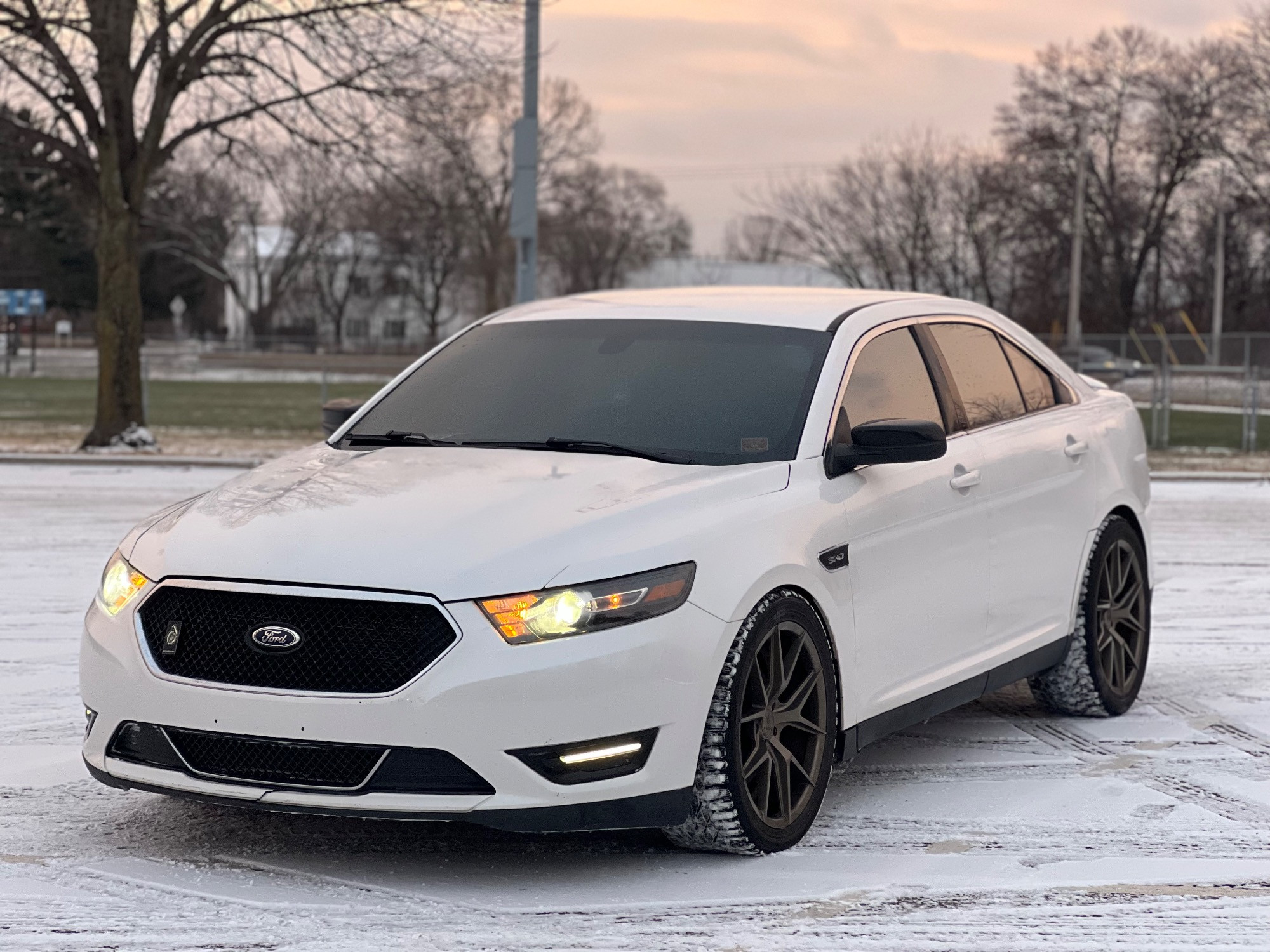
Most tire pressure monitoring systems turn on the warning light when a tire falls about 25 percent below the recommended pressure. On a car that calls for 33 PSI, that is around 25 PSI. The first hard freeze of the year is the most common reason the light shows up, and the usual pattern is that it comes on during the morning drive and goes off by afternoon as the tires warm up.
That does not mean you can ignore it. The tire will be low again tomorrow morning, and a tire that is low every morning wears unevenly, uses more fuel, and grips less than it should. If the light stays on all day, or only one tire is low, you probably have a slow leak.
The same pressure as any other time of year: the number printed on the sticker inside the driver's door jamb. Some vehicles also list it in the owner's manual or inside the fuel door. That number is set by the vehicle manufacturer for that car's weight and handling, and it applies to winter tires too, unless the tire manufacturer says otherwise.
Two numbers that are not your target:
The sidewall number. The pressure printed on the tire is the maximum the tire is rated for, not what your car needs. Running at the max makes the ride harsh and shrinks the contact patch.
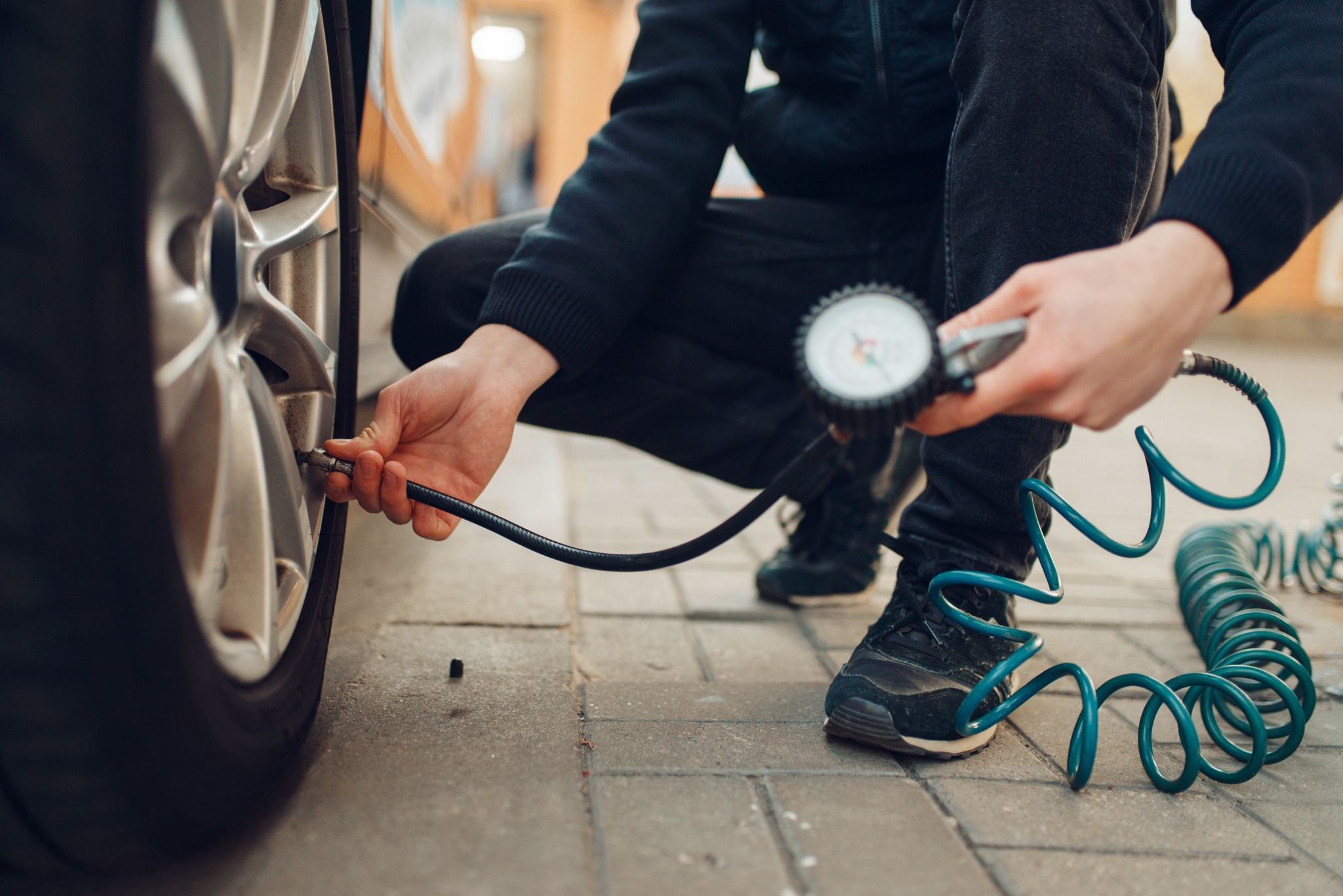
Whatever the gas station gauge says. Station gauges are often off by several PSI. A decent digital or dial gauge costs less than a lunch and lives in the glovebox.
Some drivers lower their pressure in winter thinking a softer tire grips snow better. It does not help on the road and it hurts handling, wear, and fuel economy. Run the door jamb number.
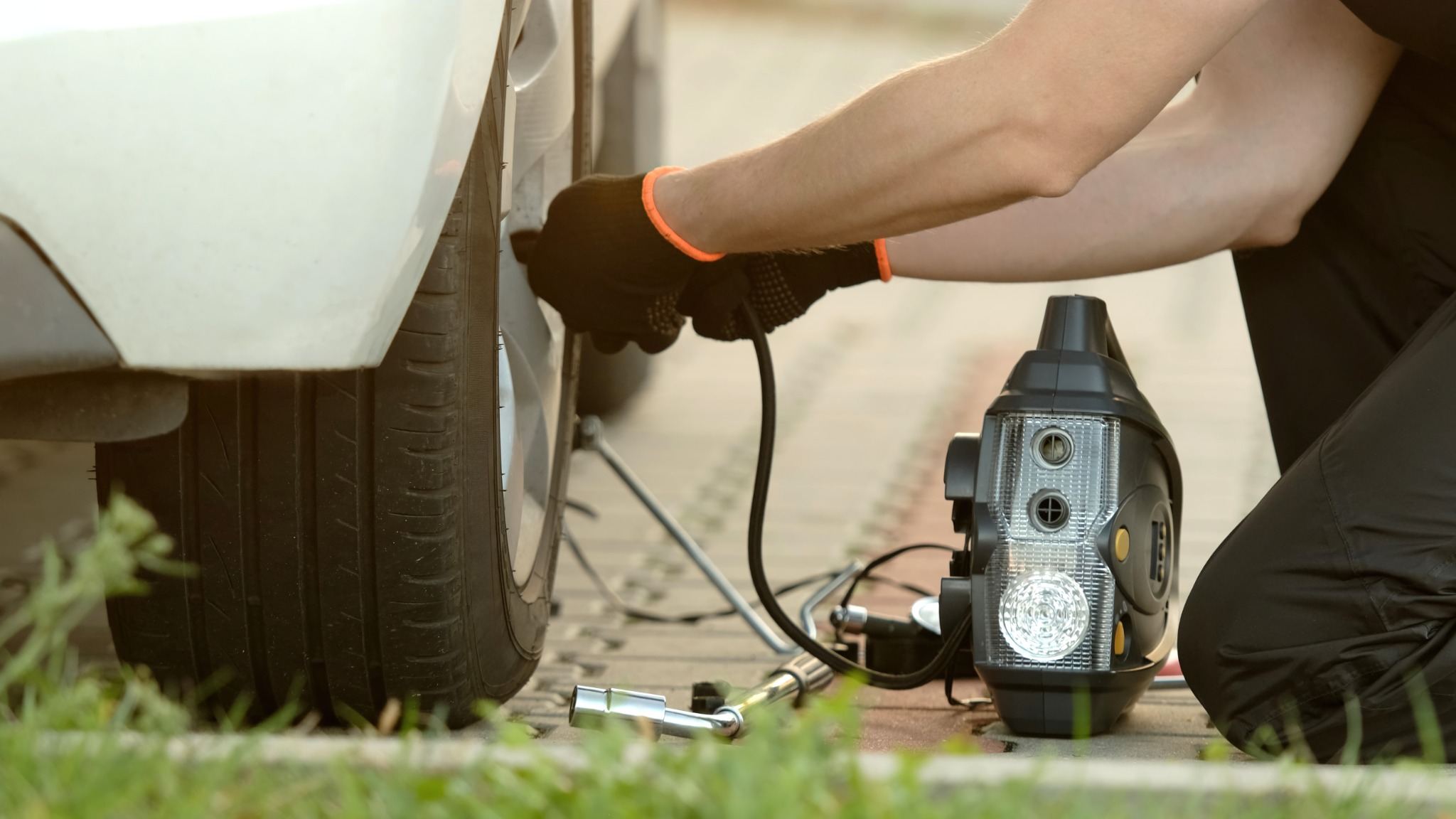
Check cold. Before you drive, or after the car has sat at least three hours. Driving warms the tires and raises the reading by a few PSI, so a warm check will tell you the tire is fine when it is not.
Check at the temperature you drive in. If the car sleeps in a heated garage and you set the pressure there, it will be low the moment you park outside. Set it to the door jamb number, then add 1 PSI for every 10°F colder it will be outside than in the garage.
Do all four, plus the spare. A spare that has been in the trunk since summer is almost certainly low.
Recheck after each big cold snap. Once a month is the minimum. During the first month of real cold, every couple of weeks is better.
Reset the TPMS if your car requires it. Some vehicles need a reset after inflating. Check your manual.
Not really. Nitrogen leaks through rubber a little slower, but it still contracts in the cold. A nitrogen-filled tire drops a bit less than an air-filled one, not zero. It does not replace checking your pressure.
If you run a dedicated set of winter tires, check their pressure right after they go on and again a week later. Tires that have been stored since spring will have lost pressure sitting in the garage. Our guide on when to switch to winter tires covers timing the swap, and if you are still deciding whether you need a winter set at all, start with winter vs. all-weather vs. all-season.
The same rule applies to trailer tires, which is worth remembering if you tow in cold months. Those are meant to run at the maximum sidewall pressure, which is different from passenger tires. Our trailer tire guide explains why.
If your tires are low every morning no matter what you do, or they are worn enough that cold grip is a concern, enter your year, make, model, and trim at onlytires.com to see what fits. Shipping is free to the lower 48, to your door or to one of 18,000+ installers, with our Guaranteed Fitment Promise on every order. For the cold-weather picks, see the Best Winter Tires guide or call 920-560-2430 and talk to a tire specialist.