Tire installer will only be applicable to your most recent vehicle search. If you would like tire installation on another vehicle, please make separate orders.
Missing vehicle or zipcode information. Enter your missing vehicle or zipcode here to view installer options.
Ship to Local Installer
Ship to Home
Road Hazard Protection with Extend.
Order Total
excl. tax
$0.00
OR EXPRESS CHECKOUT
Warning!
Are you sure you want to remove Anthem Off Road LT275/70R18 Tire from your cart?
Enter Your Vehicle
billing information
Trailer Tire Guide: ST Tires, Load Ranges & When to Replace
September 28, 2026
Trailer Tire Guide: ST Tires, Load Ranges & When to Replace | Only Tires
By Only Tires | 5 min read
Quick answer: Trailer tires are marked ST (Special Trailer) and are built with stiffer sidewalls to carry weight and resist sway, not to steer or drive. Match the size and load range to your trailer's sticker, inflate to the maximum pressure on the sidewall, keep your speed at or below the tire's rating (65 mph unless marked higher), and replace them every 3 to 5 years regardless of tread. Trailer tires almost always age out before they wear out.
What Does ST Mean on a Tire?
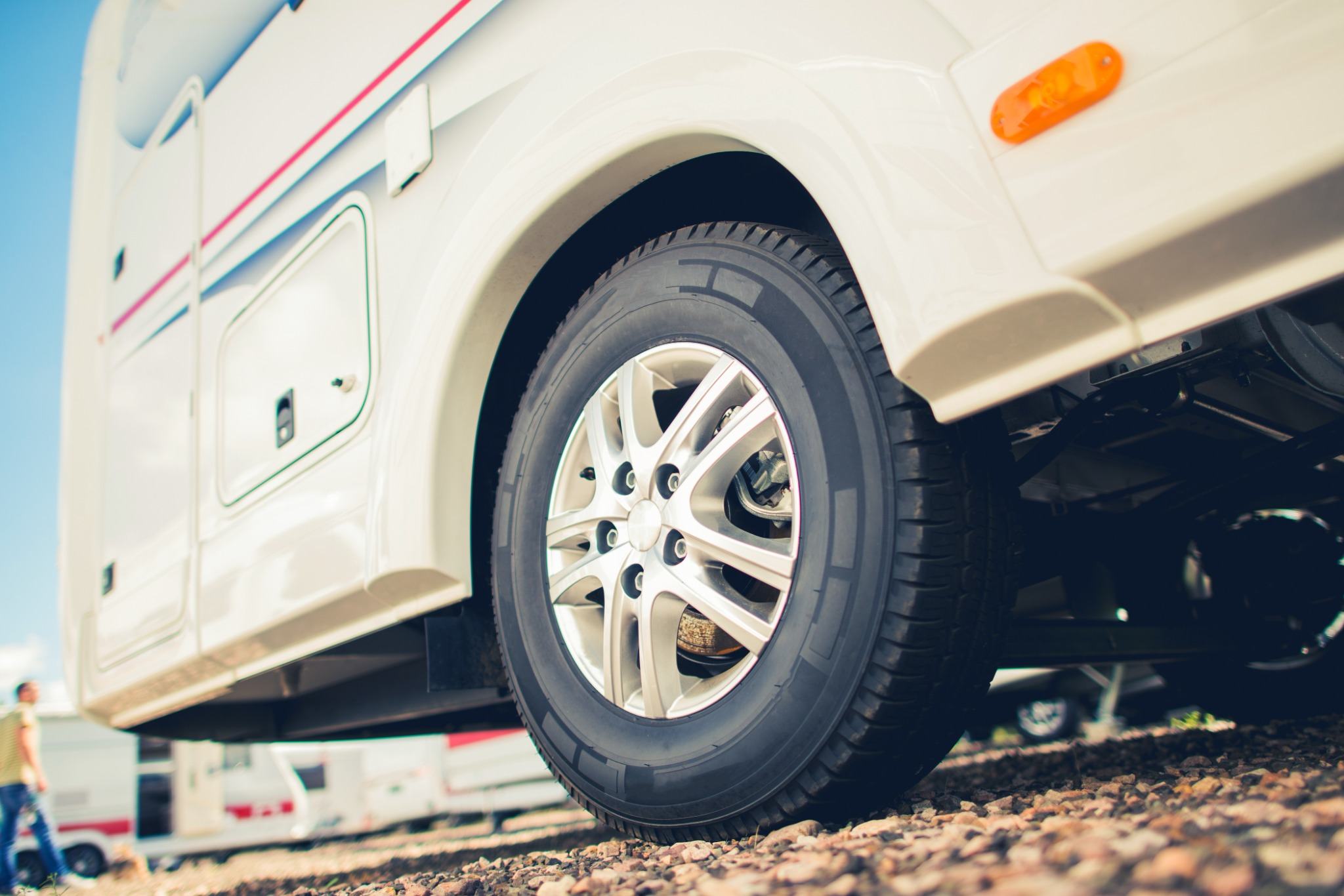
ST stands for Special Trailer. It is the designation for tires built specifically for towable trailers: boat trailers, utility trailers, campers, car haulers, and the like. An ST tire has a stiffer sidewall and a heavier internal structure than a passenger (P) or light truck (LT) tire of the same size. That stiffness is what keeps a loaded trailer from wagging behind the truck. ST tires are not designed to steer or put power to the ground, which is why they only belong on trailer axles.
LT tires can work on some heavy trailers if the load rating is high enough. Passenger tires cannot. They flex more, run hotter under trailer loads, and are a common cause of highway blowouts.
A trailer tire size reads the same way as a car tire, with ST in front. ST205/75R15 means a Special Trailer tire, 205 millimeters wide, with a sidewall that is 75 percent of the width, radial construction, on a 15 inch wheel. The most common sizes in the U.S. are:
ST175/80R13 and ST205/75R14: small utility and boat trailers.
ST205/75R15 and ST225/75R15: the two most popular sizes by a wide margin. Mid-size boat, utility, and camper trailers.
ST235/80R16 and ST235/85R16: larger campers, car haulers, and equipment trailers.
Your trailer's size is on the capacity sticker, usually on the tongue or the front of the frame. Match it.
Load range is the letter that tells you how much weight a tire can carry at max pressure. It replaced the old ply rating:
Load Range B: 4 ply rating. Light utility trailers.
Load Range C: 6 ply rating. Small to mid-size boat and utility trailers.
Load Range D: 8 ply rating. Mid-size campers and car haulers.
Load Range E: 10 ply rating. Heavier campers, equipment trailers, and anything that gets loaded hard.
Load Range F and G: 12 and 14 ply ratings. Commercial and heavy equipment trailers, usually 16 inch and up.
To pick the right one, take your trailer's gross vehicle weight rating, divide by the number of tires, and make sure each tire's max load on the sidewall clears that number with room to spare. Going up a load range from what the trailer came with is fine and often a smart move. Going down is not.
This is the part most people miss. Unless an ST tire is marked with a speed rating, it is rated for 65 mph. Towing faster than that builds heat, and heat is what kills trailer tires. Newer ST tires often carry a letter rating that allows more:
L: 75 mph.
M: 81 mph.
N: 87 mph.
The Goodyear Endurance, which is the most searched trailer tire in the country, is N rated and made in the U.S. If you tow at highway speed regularly, a rated tire like that is worth the extra cost over an unrated one.
Unlike the tires on your truck, trailer tires should be inflated to the maximum cold pressure on the sidewall. That stiffness controls sway and keeps the tire from overheating under load. Check them cold before every trip. Cold weather lowers pressure here the same way it does on your truck; our post on why cold weather drops your PSI applies here too, and the fix is the same.
Trailer tires rarely wear out. They age out. A boat trailer might put on 500 miles a year, so the tread looks new while the rubber dries and loses strength. Most manufacturers recommend replacing trailer tires every 3 to 5 years no matter how much tread is left.
To find a tire's age, look for the DOT code on the sidewall. The last four digits are the week and year it was made. "2321" means the 23rd week of 2021. If that date is more than five years back, plan on replacing the tire before your next long trip.
Replace sooner if you see sidewall cracking, bulges or flat spots from sitting, uneven wear (usually an axle or bearing problem), or a tire that keeps losing pressure between trips.
Replace in sets, or at least in pairs on the same axle, and carry a mounted spare.
The Goodyear Endurance is the benchmark: N speed rating, U.S. made, long track record. Carlisle Radial Trail HD and Maxxis M8008 ST Radial are the other names that come up constantly from people who tow a lot, and Kenda and Trailer King cover the value end. For a boat trailer that sits most of the year, any of them will do. For a camper you tow across the country, spend up on a rated tire.
Search by size at onlytires.com to see ST trailer tires in the size and load range your trailer calls for, including Goodyear and other major brands. Shipping is free to the lower 48, to your door or to one of 18,000+ installers. Order a spare at the same time and save yourself a trip.
Not sure what load range your trailer needs? Call 920-560-2430, Monday through Saturday, with the numbers off your trailer's sticker and a tire specialist will match you up.
No. Passenger tires flex more and run hotter under trailer loads. Use ST tires, or LT tires with a high enough load rating if the trailer was designed for them.
How fast can you drive on trailer tires?
65 mph unless the tire carries a speed rating letter. L is 75, M is 81, N is 87.
How long do trailer tires last?
Plan on 3 to 5 years from the date on the DOT code, regardless of tread depth. Sun exposure and sitting unused shorten that.